Showing posts with label Roddy Doyle. Show all posts

13 August 2008

A Tour of My Bookshelves, Part 2 of 33

Confession: I didn't want to go to Mango's today, but I did anyway. For exactly five minutes. What is the value of obeying the letter, but not the spirit, of a promise?

Reading:
  • "My Brother Eli" by Joseph Epstein
  • The House of Mirth, by Edith Wharton
Writing:
  • "Ferian Fetlock Catches a Cold"
Revising:
  • "The Revenant"
Future Projects:
  • Dairhenien's Library - Development
  • Floorcraft - First rewrite of 1-5, first draft of 6-8
  • Ferian Fetlock - "Ferian Fetlock Takes a Wife."
  • "Motley" - Expansion
  • "Fireworks and Earthworks" - 5% into first draft
  • Untitled School Mistress Story
Unpublished Stories/Status (in chronological order of completion of first draft)
  • "Pictures of the Old Port" - 5th Draft, Unsubmitted
  • "What Price Stamps" - 3rd Draft, Submitted to The American Drivel Review, July 30th, 2008
  • "The Frost Fugling" - 2nd Draft, Unsubmitted
  • "Black Pudding" - 2nd Draft, Unsubmitted
  • "Cora and the Sea" - 3rd Draft, Unsubmitted
  • "Motley" - 2nd Draft, Unsubmitted
  • "Leaves and Sunsets" - 2nd Draft, Unsubmitted
  • "A Happy Ending" - 1st Draft, Unsubmitted
  • "The Revenant" - 2nd Draft, Unsubmitted
  • "Illuminated" - 3rd Draft, Unsubmitted
  • "A Cup of Coffee" / "Morning Tea" - 2nd Draft, Submitted to Tea: A Magazine, July 29th, 2008
  • "Ferian Fetlock Cures a Horse" - 2nd Draft, Unsubmitted
  • "Hattie Donnelly's Favorite Doll" - 2nd Draft, Submitted to 24 Hour Short Story Contest, July 27th, 2008
The previous entry in this series can be found here.

I continue the tour of my bookshelves with the remainder of my P.G. Wodehouse collection. As you can see, it occupies the right third of this shelf. Following the Wodehouse novels and short stories, you can see another couple of volumes related to those, one of which offers quotations from various Wodehouse works on varied themes, and another which explores the character and relations between Wodehouse's various sagas, many of which interconnected.

From Wodehouse, I move on to other books of humor. Dave Barry, of course, has to be in there, as does the Onion, America: The Book, and I Am America (And So Can You!). These are all classic, of course, and should be read by everyone.

Also note the Mark Twain, one of the funniest humorists of any century, plus... you guessed it... more P.G. Wodehouse! These are some of the paperbacks I bought before I knew that the hardcover collection existed, and I can't bear to get rid of them--at least not until I have their entire contents in hardcover. As one of them includes short stories collected from dozens of volumes, they won't be leaving my shelves any time soon.

I also have a couple of the Worst Case Scenario Survival Guides, which were funny at first, but then just got old. I also have some scripts from Fawlty Towers and Are You Being Served?, two excellent British comedies of bygone years.

At the far right is A Treasury of Humor and Toastmaster Handbook. I do not recommend this book to anyone. It features the least amusing anecdotes that I have ever heard in my life. Seriously. It's one of the few books that I have seriously considered getting rid of, but I kept it just because you never know when a really bad anecdote might be just the thing you need.

Lying in "recently purchased but unable to file" position on top of the others is the Barrytown Trilogy by Roddy Doyle. My faithful readers, assuming there are such beings, will remember when I read through the latter two volumes of this trilogy at just about the time I started this blog. They are extremely funny, if you can read through an Irish accent and don't mind seeing the word "cunt" in print.

If you do, I guess I just lost a faithful reader. Dammit.

My final note is on 1066 and All That. It is a parody of British history, written as if by someone who is trying to recall the British history he learned in school, but has confused and forgotten. The only important date in British history, of course, being 1066.

Honestly, I learned a lot about British history by not getting the jokes, and caring enough to look up the references. I have carried this tradition through to my viewing of The Daily Show. I don't get my news from Jon Stewart. He just inspires me to care about it.

Publication Status:
  • Submitted: 5
  • Accepted: 1
  • Rejected: 1
  • Pending: 3

16 June 2008

How should it have ended?

Confession: I love learning languages, but I'm often too embarrassed to try to use them.

Reading:
  • Someplace to be Flying, by Charles de Lint
Writing:
  • "Ferian Fetlock Cures a Horse"
Revising:
  • "Dolly Hobbles"
I finished reading The Van late last night, and I was left with a profound feeling of sadness. It wasn't just that the book was over, although I always tend to feel a little let down after finishing a book I enjoy. The longer the series, the stronger the feeling. In fact, it takes a particularly satisfying ending to avoid that sensation. The most recent time that has happened was with Harry Potter.

But there was a bit more than that. The Van ended on a sad note. I'll go more into the story itself later, but so much was left open. A friendship was damaged and not yet healed. The motivation one character had to continue was gone. It was an ending filled with destruction, not creation; with loss rather than gain.

Oh, it was well written. That's part of why it hurt so much, because I related to those characters. And for a comic novel to have such a sad ending, well, I just wished the series had gone on, that's all. The previous two had ended on a happy note.

But perhaps that has to do more with the main characters of those novels. In The Commitments and The Snapper, the main characters were Jimmy Jr. and Sharon, young people whose lives were ahead of them. The Van focused on their father, Jimmy Sr., and his was at an end.

Not that he was about to die. But he had been laid off his job, and the book dealt with his depression and purposelessness in the face of forced retirement and poverty. He faced his own inadequacies and did not conquer them. He faced his own humanity and flinched.

By the end, perhaps, he had learned from his mistakes, but to what purpose? Where did he have yet to go?

I don't know, and perhaps Doyle didn't either, else he might have continued the story. We always assume that characters stay the same when their story is done, that they continue on with their same momentum perpetually until the window opens and we see them once more. If they were real people, that wouldn't be true, and there's no reason it has to be true with fiction, either. The thought that sometime down the road, Jimmy Sr. finds a purpose... well, that's the ending I want.

But it wasn't the one I got.

07 June 2008

Plot versus Story


Confession: I have terrible fashion sense. If I ever get a book advance over $500,000, I'm going to dedicate 5% of that to hiring someone to help me revamp my entire wardrobe. Someone with taste.

Reading:
  • The Van, by Roddy Doyle
Writing:
  • "Ferian Fetlock Cures a Horse"
Revising:
  • "Dolly Hobbles"


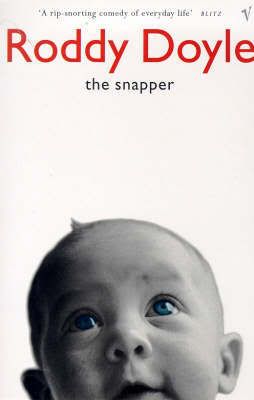
I just finished The Snapper by Roddy Doyle this morning, during the time that (according to yesterday's schedule) I was supposed to be revising "Dolly Hobbles." For shame. Still, if I do that this afternoon, then I'll have tomorrow to dip into old Ferian pretty heavy. Maybe.

Reading The Snapper got me to thinking about what "story" is, at least in relation to plot. I say this because The Snapper is a story that I could not have written. And I'm not talking about the Irish slang, either; it's a story that, in some sense, could be written in any poor, urban area with strong ties of community and a penchant for gossip. The Barrytown setting gave it flavor, but not substance.

No, it's the way an entire novel was written about a pregnancy. The baby itself is born in the last page, and serves as a denouement to the story, not even a vital part. And the plot is simple. Sharon is pregnant, and she tells her parents, then her friends. They are all remarkably okay with it, although her father does have some issues later on, which they deal with. The identity of the father gets out and causes some problems, but thanks to a lie no one believes but everyone pretends to, it turns out pretty much okay.

I could never have made that interesting. Ever. Because the scenes dealing exclusively with the plot don't really make up the story.

The story is about the Rabbitte family. The story is about Sharon in relation to her community, the whole family in relation to the community. It's a journey for Sharon's father, Jimmy Sr., and to a lesser extent for her mother Veronica. But pretty much all of her siblings get a plot thread that carries through the whole story. All of these elements work together to make the story, and make Sharon's predicament matter. Because we know her siblings, her parents, her friends, we actually care about her. We laugh along with her ribald jokes when she's with her friends, and we tremble with her when her baby daddy tries to lure her to a life with him in London.

This is not a story about a pregnancy, even though it's a plot about a pregnancy. This is a story about character. Sharon has to overcome her concern for how she appears in the eyes of the neighborhood... and so does her father. They do this different ways, but they do so successfully, and the story thus becomes a triumphant one.

And this is remarkable, all the more so given the somewhat appalling conditions in which Sharon lives. We see her excessive drinking during the pregnancy, even up to the last week, and we have one more reason than Sharon does to worry that the child won't be born healthy. We see Jimmy's self-indulgent attempted manipulation of Sharon, to try to wrangle out an apology, yet we still somehow sympathize with him.

It's remarkable because we see all these things through the eyes of the participants, and we can see the love and affection the characters have for each other. We see this through the filter of the culture in which it is set, without judging them too harshly.

The final novel in the trilogy, The Van, focuses on Jimmy after he loses his job. (I'm only a page into the story, now, so I can only echo what I've been told about it.) But again, that's just the plot, and I can't wait to find out what the story is about.

03 June 2008

Story for the Sake of Character

Confession: I'm a political junkie. What could have been a great evening of writing has turned into a CNN marathon.

Reading:
  • The Snapper, by Roddy Doyle
Writing:
  • "Ferian Fetlock Cures a Horse"
Revising:
  • "Dolly Hobbles"
As you can see above, I've started a new book now. It is the second book in the Barrytown Trilogy, a series of novels written about the Rabbitte family, poor, working-class Dubliners. As an American, I can't pretend to understand more than 60% of the references in the series, but I was attracted to it years ago thanks to an excerpt in a collection of Irish humor I got one St. Patrick's Day.

The previous novel in the series, The Commitments, as well as The Snapper, share one trait in common--the clever use of dialogue. The text is written in non-standard English, making full use of profanity, slang, and accents rendered into spelling. And that more than anything makes the characterization come completely alive.

You don't have to understand every word or phrase to understand the story, because the power of the characters drives it along. The Commitments had a simple plot--it centered around a young man named Jimmy Jr., and his quest to form and manage a soul band in Dublin. The Snapper has even less of a plot, in a way. In it, Jimmy's sister Sharon is pregnant, and as of now, she has not yet revealed the name of the father to anyone. We see Sharon dealing with her new situation, and her friends, and siblings, and parents.

In one respect, nothing has really happened. Sharon broke the news about fifty pages ago. But I keep reading not to find out what happens next, but to find out more about the people in the story. In that regard, reading The Snapper is a lot like hanging out with your friends. Sometimes the point is not what you do together, but who you do it with.